Model Context Protocol (MCP): Overview
Introduction: The "USB-C for AI"
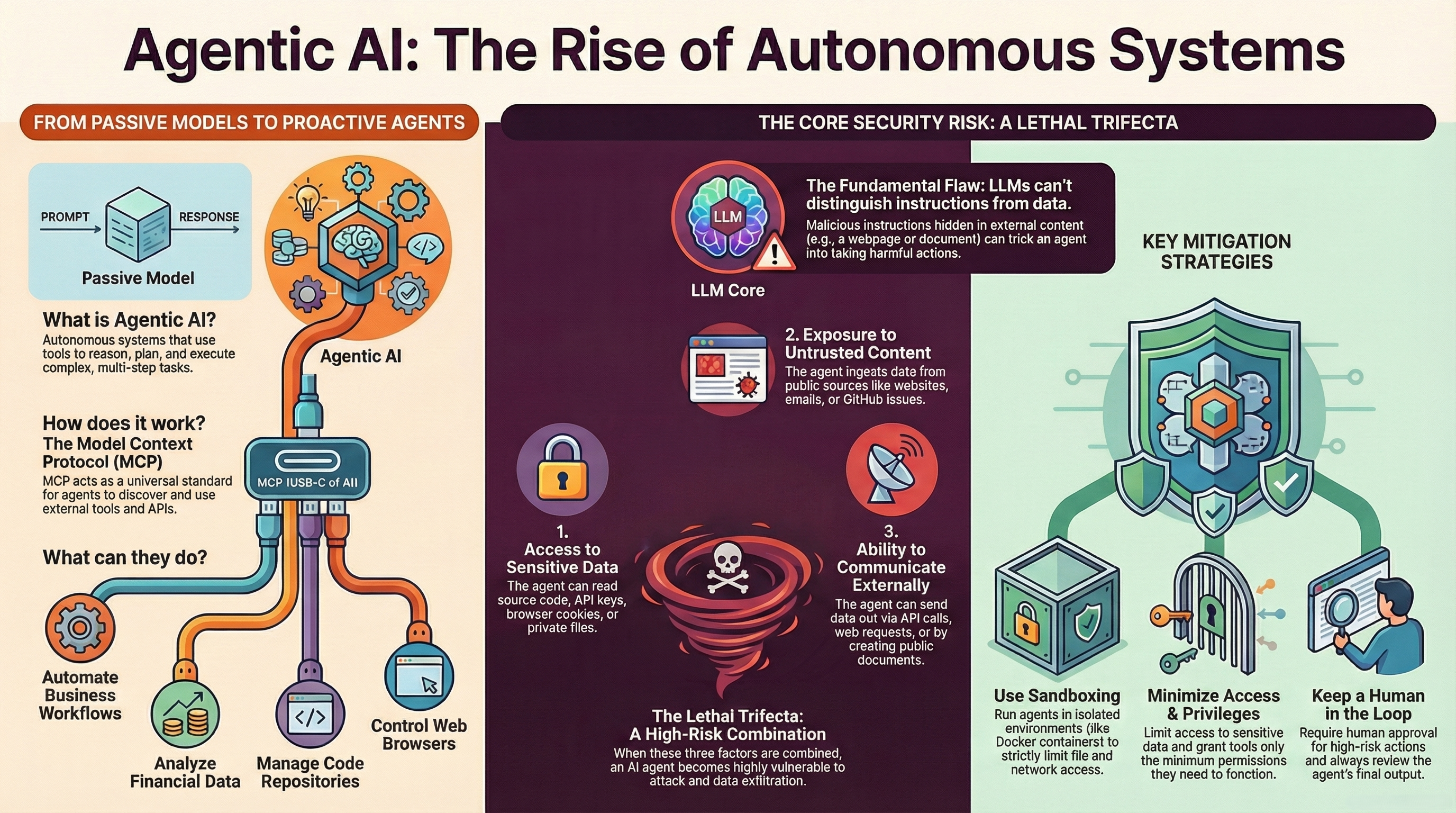
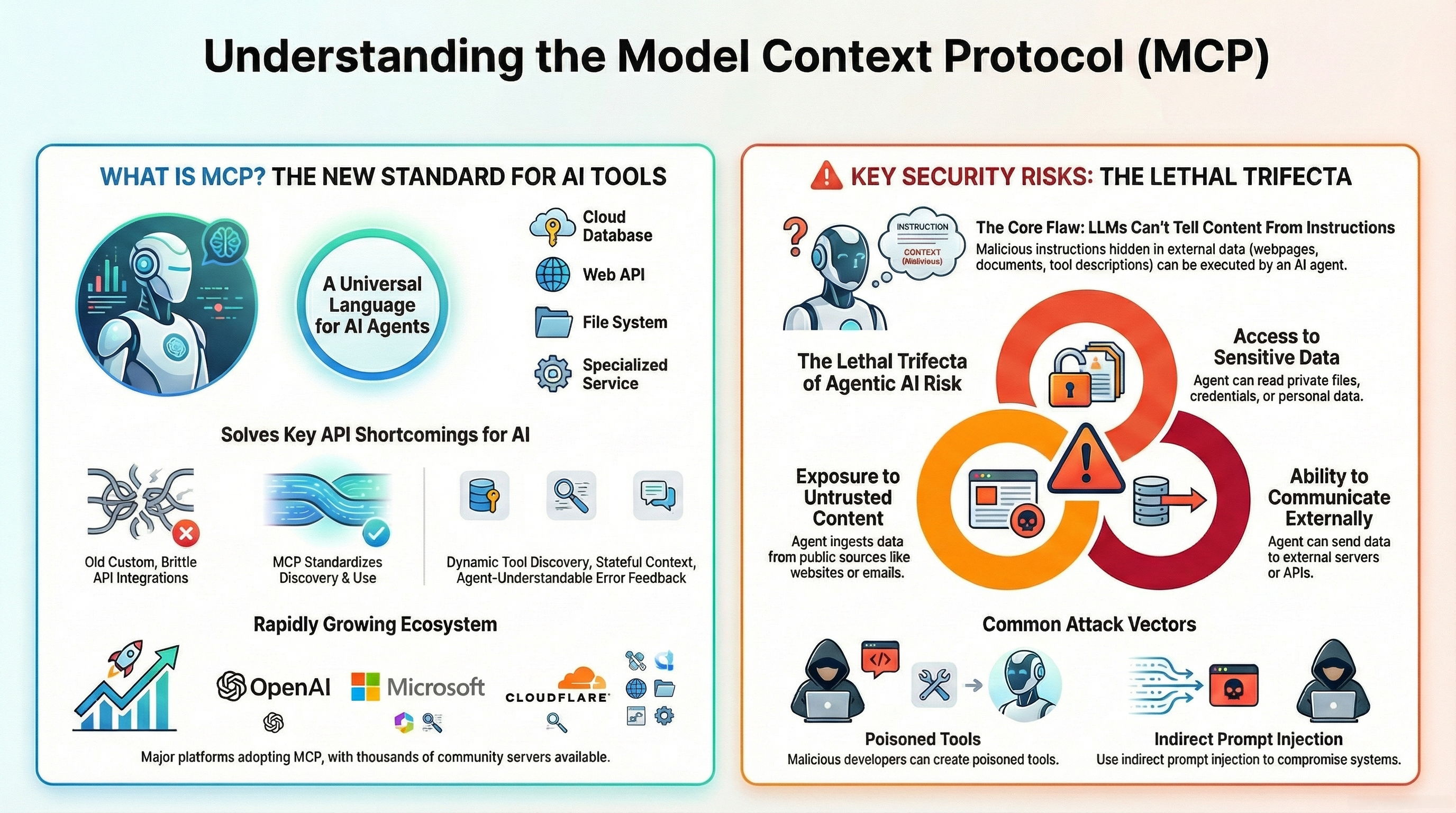
The Model Context Protocol (MCP) is an open standard that enables AI models to securely and efficiently interact with external tools and data resources.
It serves as a "universal translator" or connector, similar to a USB-C port, allowing any AI application (the "host") to connect with any external tool or data source (the "server") without needing custom integrations for each pair.
The Challenge: The "N×M" Integration Problem
Before MCP, the AI landscape was fragmented. Integrating AI agents with external tools presented a combinatorial challenge:
- N Agents (e.g., Claude, ChatGPT, IDE assistants)
- M Data Sources/Tools (e.g., Google Drive, Slack, PostgreSQL, GitHub)
Without a standard, developers had to build N × M unique connectors. This resulted in:
🔌 High Maintenance
Every API change broke integrations.
🏝️ Silos
Tools built for one platform didn't work on another.
📉 Inefficiency
Redundant work stifled innovation.
MCP solves this by creating a shared language. Developers build an MCP server for their tool once, and it instantly works with any MCP-compliant client (agent).
Core Primitives
MCP defines three primary mechanisms ("primitives") for interaction:
| Primitive | Controlled By | Description | Example |
|---|---|---|---|
| Tools | Model | Executable functions that allow the AI to act. | send_email, query_db |
| Resources | Application | Read-only data sources that provide context. | File contents, Logs |
| Prompts | User | Pre-defined templates for standard workflows. | "Analyze codebase" |
MCP vs. Traditional APIs
While traditional REST APIs are essential for web services, they are not optimized for autonomous agents. MCP introduces key differences:
-
Stateful SessionsMaintains a connection session to manage context effectively.
-
Dynamic DiscoveryAgents can "discover" capabilities at runtime (progressive disclosure).
-
Bidirectional CommunicationServers can push notifications (e.g., "Resource Updated") to clients.
Strategic Value
Adopting MCP moves the industry from a fragmented ecosystem of bespoke connectors to a scalable, interoperable infrastructure.
Real-World Application Domains
MCP is powering transformation across major sectors:
👨💻 Dev & DevOps
- "Vibe Coding": Natural language coding via IDE integration.
- IaC: Agents managing AWS/K8s clusters.
- LSP Bridge: Connecting standard language servers to agents.
🏢 Automation
- Finance: Automated invoice & expense processing.
- Supply Chain: Auto-restocking via API monitoring.
- HR: Resume matching against ATS systems.
Multi-Agent Systems (MAS)
MCP is the foundational "connective tissue" for multi-agent collaboration.